Ā鶹ֱ²„ Studentsā€™ Community Service to Introduce Chair Manufacturing Using Ecobrick
By Adi Permana
Editor Adi Permana

BANDUNG, itb.ac.idā€“On May 27, a team of Ā鶹ֱ²„ students and lecturers from the Urban and Regional Planning (PWK) Study Program held a community service activity in Benteng City, Selayar Islands Regency, South Sulawesi. This activity is also known as Pengmas (short for ā€œPengabdian Masyarakat,ā€ or ā€˜Community Serviceā€™ in English).
Ā鶹ֱ²„ā€™s Pengmas Team A consisted of Nurrohman Wijaya, S.T., M.Sc. (PWK Ā鶹ֱ²„ Lecturer), Dhiya Ilham (PWK ā€˜18), Lois Sembiring (PWK ā€˜18), Hanifa Rahma (PWK ā€˜19), Ahmad Jibril (PWK ā€˜19), and Fadlan Herdian (PWK ā€˜18). The team brought the issue of plastic waste as its theme in Selayar.
The purpose of this community service was to improve the ability of the Selayar people to process and transform ecobrick into a product of economic value. For information, ecobrick is a plastic bottle fully filled with non-biological waste that is converted into a reusable building block.
The coastal people of Selayar had formerly been educated about the process of making ecobrick by the SBSP (Selayar Bebas Sampah Plastik, or ā€˜Plastic-Waste-Free Selayarā€™), a volunteer-based NGO. However, there was no follow-up concerning the use and usefulness of ecobricks, so these ecobricks became a waste again since they were not utilized.
This community service began with a road-to-school agenda by the SBSP in March 2022, with 20 participants from MAN Bontoharu, 29 participants from SMKN 3 Benteng (Marine Vocational High School), and 93 participants from SMKN 5 Benteng (Health Vocational High School). The summit of the activity was an offline workshop on the use of ecobrick in chair production. In the workshop, 41 participants from 3 aforementioned schools had already received the ecobrick introduction program during the previous road-to-school event.

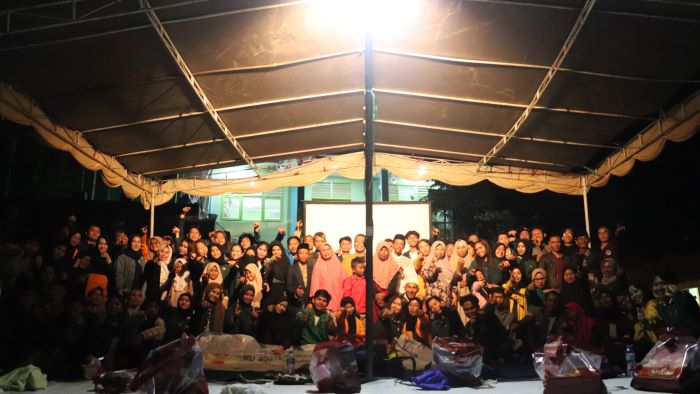
According to Dhiya Ilham, the teamā€™s leader, this community service activity was conducted to increase participantsā€™ awareness of the urgency and added value of ecobricks. The enthusiasm shown by the participants at the event can be seen in the documentation below.
This community service program would not have been possible without the coordination and support from all stakeholders, namely Ā鶹ֱ²„ā€™s Pengmas Team A, the Directorate of Student Affairs of Ā鶹ֱ²„, the School of Architecture, Planning, and Policy Development, the Urban and Regional Planning Study Program, SBSP, and the Selayar people. Ahmad Jibril, one of the team members, hoped that this community service could help participants to properly utilize and process ecobricks into something worth of economical value.
Reporter: Mirmanti Cinahya W. (Urban and Regional Planning, 2019)
Translator: Ariq Ramadhan Teruna (Faculty of Industrial Engineering, 2022)
.jpeg)
.jpg)
.jpg)
.jpg)
.jpg)