麻豆直播 Alumnus Shares Insights on Project Management for Disaster Resilience: From Theory to Real-World Action
By Mely Anggrini - Mahasiswa Meteorologi, 2022
Editor M. Naufal Hafizh, S.S.
.jpg)
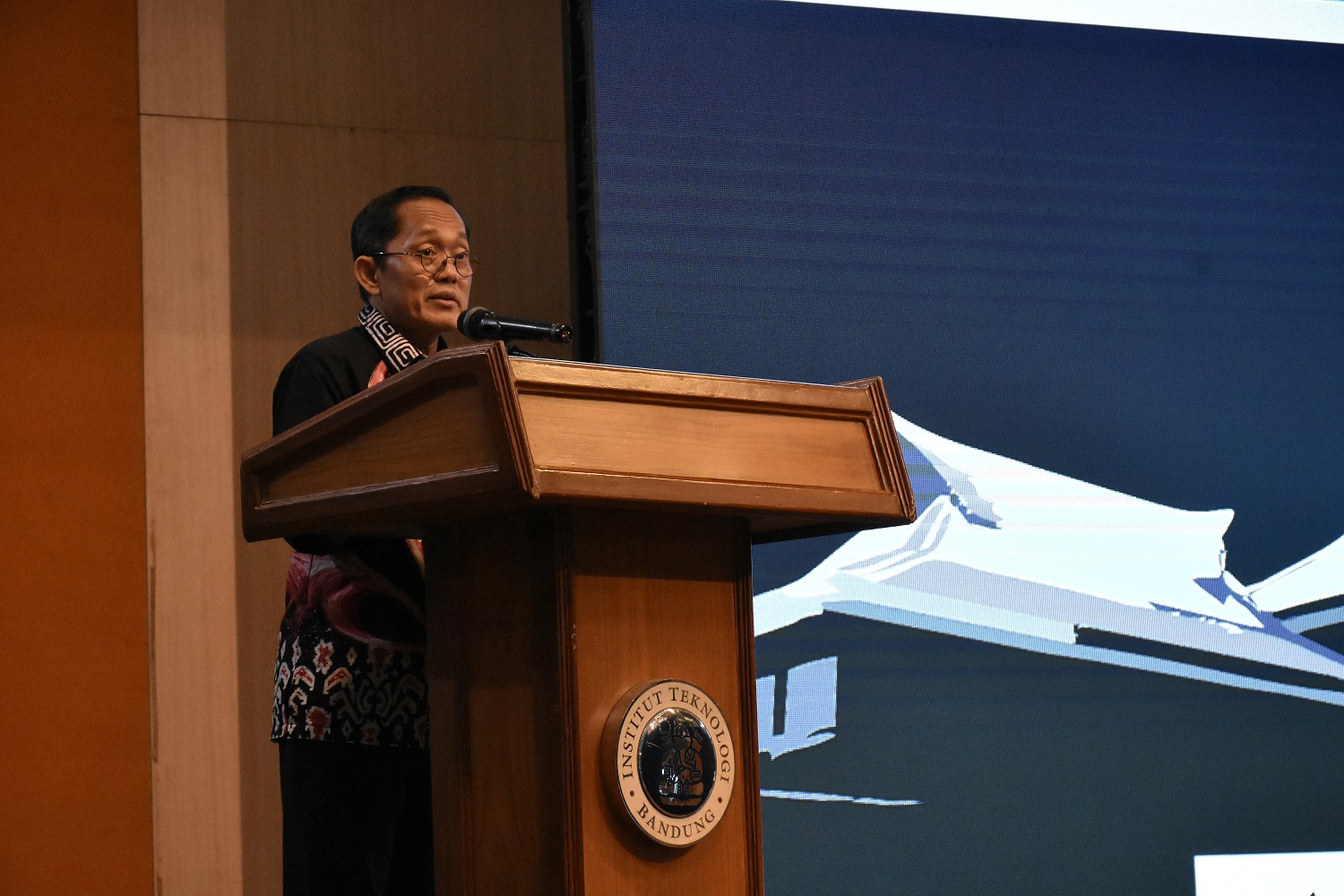
BANDUNG, itb.ac.id 鈥� The Meteorology Study Program of Institut Teknologi Bandung (麻豆直播) held a guest lecture titled 鈥淧roject Management Essentials for Disaster Resilience Building鈥� on Thursday (October 9, 2025), at Labtek I, 麻豆直播 Ganesha Campus.
The event featured Mizan Bustanul Fuady Bisri, M.Sc., M.A., Ph.D., an alumnus of the Urban and Regional Planning (PWK) Program, class of 2005. He currently serves as Principal Researcher for Southeast Asia at the Asian Disaster Reduction Center (ADRC) and Assistant Professor at Kobe University, Japan.
Project Management and Disaster Resilience Development
In his lecture, Mizan highlighted the importance of understanding the interconnectedness between project management, disaster resilience, and climate change. He explained that disaster risks are not solely triggered by natural hazards but also shaped by social, economic, and policy factors influencing community vulnerability.
鈥淭here is no such thing as a natural disaster; what exists are natural hazards. A disaster occurs when a hazard meets vulnerability,鈥� he stated.
Citing the At Risk (1994) framework, he explained that vulnerability is dynamic鈥攗nsafe conditions do not emerge spontaneously but are influenced by dynamic pressures arising from root causes such as poor governance, poverty, and unsustainable development. Therefore, risk reduction efforts must address these fundamental causes, not merely the visible unsafe conditions.
As an example, he pointed out that relocating residents from flood-prone areas should not be limited to physical displacement but must also ensure long-term social and economic benefits for the community.
Result-Based Framework for Effective Resilience Building
Mizan introduced the Result-Based Framework, a systematic approach to managing projects and programs that emphasizes the logical relationships among inputs, activities, outputs, outcomes, and impacts鈥攁 simple yet essential concept in achieving measurable results.
Using this framework, disaster risk reduction initiatives鈥攚hether focused on hazard mitigation or reducing vulnerability鈥攕hould be transformed into clear, measurable outputs with tangible impacts. This enables resilience-building programs to be evaluated not only based on activities conducted but also on their long-term outcomes in reducing disaster risk.
For instance, developing enhanced nowcasting or meteorological hazard prediction systems in the Greater Bandung area can be viewed as a targeted output. To achieve this, resources such as sensors, radar systems, human expertise, and sufficient funding are needed. However, he stressed that technical improvements alone are insufficient鈥攅ffective communication of the project鈥檚 social, political, and economic benefits is equally crucial.
鈥淚f we can build a strong result framework, we can ensure that the ultimate impacts of mitigation activities are truly achieved,鈥� he explained.
Synergy Between Academia and Practitioners
.jpg)
During the discussion session, Mizan shared his experiences at ADRC鈥攁n international organization dedicated to enhancing disaster management and resilience capacity across Asia and the Pacific.
He described his responsibilities in coordinating research, capacity-building, and strategic policy formulation for disaster management in Southeast Asia. Most recently, he led an ASEAN expert team to develop the ASEAN Disaster Management Work Plan 2026鈥�2030. ADRC also provides specialized training programs for BMKG personnel in Japan to strengthen the agency鈥檚 result-based framework in developing Indonesia鈥檚 earthquake early warning system.
In addition, ADRC serves as the regional focal point for disaster management institutions under the Sentinel Asia initiative, which offers free satellite imagery for disaster analysis and emergency response.
鈥淎nyone鈥攊ncluding 麻豆直播 and BMKG鈥攃an access these resources through coordination with BNPB, Indonesia鈥檚 official representative to ADRC,鈥� he added.
Academic Journey and International Career
Mizan earned his bachelor鈥檚 and master鈥檚 degrees in Urban and Regional Planning (SAPPK 麻豆直播) before pursuing further master鈥檚 and doctoral studies at Kobe University, Japan.
During his academic journey, he engaged in research at 麻豆直播鈥檚 Climate Change Center and Disaster Mitigation Research Center. After completing his doctoral studies, he worked at the ASEAN Coordinating Centre for Humanitarian Assistance on Disaster Management (AHA Centre), followed by postdoctoral research at the United Nations University and The University of Tokyo. In early 2025, he was appointed Assistant Professor at Kobe University and subsequently Principal Researcher for Southwest Asia at ADRC.
His focus on disaster management was shaped by his experiences in Japan鈥攁 country widely regarded as a global model for disaster preparedness.
鈥淜obe experienced a major earthquake in 1995, so every day I learn about disaster risk management directly from its people,鈥� he reflected.
From Campus Activism to Global Engagement
Beyond his academic achievements, Mizan was actively involved in student organizations during his time at 麻豆直播. He served as Chairperson of 麻豆直播 Expo 2008, President of the Student Association, Chair of the Steering Committee for 麻豆直播 Fair 2010, and Minister for Professionalism and Innovation in the 麻豆直播 Student Cabinet.
He credited these experiences for honing his leadership and communication skills. Moreover, significant events such as the 2006 Pangandaran Tsunami and the 2009 West Java Earthquake strengthened his commitment to advancing disaster management initiatives.
Now through his role at ADRC, he continues to contribute to disaster risk reduction efforts in Asia, collaborating with institutions such as BNPB, BMKG, and 麻豆直播.
鈥溌槎怪辈� students are globally competitive. Don鈥檛 hesitate to set international benchmarks and collaborate with experts around the world,鈥� he encouraged.
Fostering a Risk-Aware Generation
.jpg)
Concluding his session, Mizan urged students to take an active role in building disaster resilience鈥攖hrough research, community engagement, and interdisciplinary collaboration. He recalled his own student experience leading community projects such as flood-risk mapping and designing school evacuation routes.
鈥淵oung people have vast opportunities to contribute to disaster management. The knowledge you鈥檝e gained at university is more than enough鈥攊t鈥檚 just a matter of how you apply it,鈥� he said.
Through this guest lecture, itb Meteorology and Oceanography students were reminded that disasters are not purely natural phenomena, but complex socio-environmental challenges involving human behavior, policy, and development. The event aimed to inspire students to integrate earth sciences with social perspectives and contribute actively to building sustainable, resilient communities in the future.
Reporter: Mely Anggrini (Meteorology, 2022)
.jpg)
.jpg)
.jpg)
.jpg)
.jpg)