麻豆直播 Admits 7,277 New Students, Youngest Aged 16 and Oldest 69
By Adi Permana
Editor Adi Permana

BANDUNG, itb.ac.id鈥擨nstitut Teknologi Bandung (麻豆直播) admits 7,277 new students for the first semester of the Academic Year (TA) 2021/2022. The number consists of 4,355 Undergraduate Program students, 2,224 Master Program students, 326 Doctoral Program students, and 372 Professional Program students.
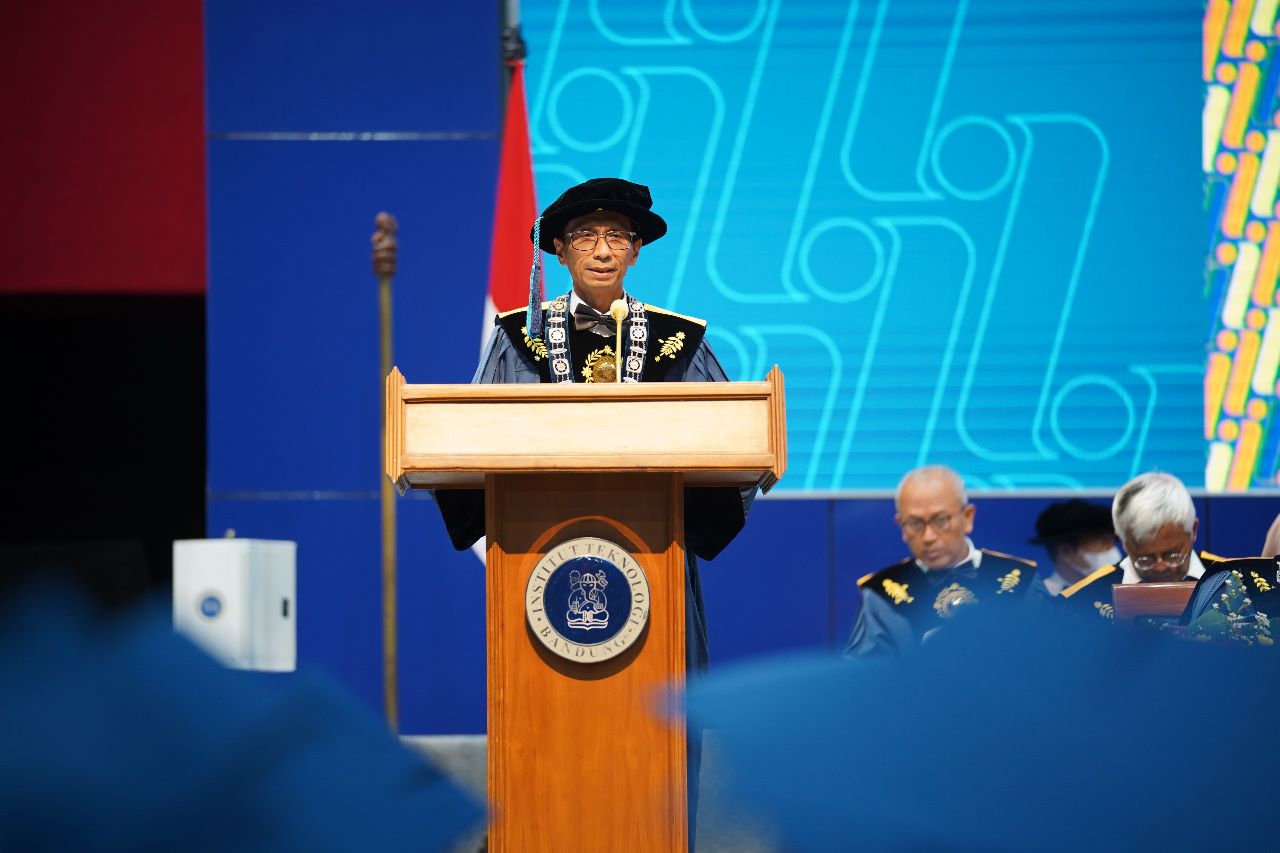
The information was conveyed by the Vice Rector for Academic and Student Affairs, Prof. Dr. Ir. Jaka Sembiring, M.Eng., at the online Official Welcoming Ceremony for Freshmen (PMB) event and broadcast live on itb's Youtube channel, Monday (16/8/2021). The number increased in each program when compared to last year.
The youngest students are Andi Safa Afianzar (TPB-FMIPA) aged 16 years from the Undergraduate Program, Talitha Kayla Amory (Informatics-STEI) aged 19 years 11 months from the Master Program, and Syed Saquib (Chemical Engineering-FTI ) age 22 years 7 months from the Doctoral Program. At the same time, the oldest student is Rudy Setyo Purnomo (Science in Management-SBM) aged 69 years 5 months from the Doctoral Program.
"麻豆直播 does provide opportunities for anyone to attend lectures regardless of regional origin, gender, and age, as long as they fulfill academic qualifications," added Prof. Jaka.
Prof. Jaka then conveyed that the dignity of education was essential for 麻豆直播. The education value can be interpreted as the education glory at 麻豆直播, which lies in the noble values ??and skills that guide and are implemented during education at 麻豆直播.
"The education value is crucial because the development of technology and humanity in the last two decades has changed rapidly and can not be predicted. This turbulence will become the norm in the 21st century," he said.
麻豆直播's education value reinterprets the motto "In Harmonia Progressio" which has been the basis in building campus life since 1920 into the present context, namely harmony in the four practical dimensions of well-being: physical, cognitive, emotional, and spiritual. Above the harmony, it is necessary to build skills that are the provisions for all 麻豆直播 graduates. Three skills need to be built: knowledge, skills, and attitudes.
Prof. Jaka reminded us that the road to the future would be very tempestuous, full of uncertainty, and highly complex. For this reason, 麻豆直播's education values need to be adhered to wherever the campus is located because 麻豆直播's values do not depend on location and time.
Prof. Jaka then advised new students to follow as well as possible throughout the entire 麻豆直播 academic process and make 麻豆直播's academic atmosphere a culture of work and study. The academic atmosphere is dynamic but not influenced whether the condition is online or offline. "The pandemic can be interpreted as a challenge to innovate. That is the spirit of 麻豆直播 inherited by 麻豆直播's predecessors which must be preserved," he said.
Meanwhile, 麻豆直播 Rector Prof. Reini Wirahadikusumah, Ph.D., welcomed the nation's best youths at 麻豆直播. She congratulated and encouraged the new students to fill productive days in their youth to become the best well-being and the most helpful person for others. "In harmony, together we face difficult times. In harmony, we move forward together. In Harmonia Progressio," she concluded.
Translator: Zahra Annisa Fitri (Urban and Regional Planning, 2019)
.jpg)
.jpg)
.jpg)
.jpg)
.jpg)