Indonesia’s Mining Conference: Mining Talks Dissecting Digitalization Strategies and the Role of AI in the Future of National Mining
By Chysara Rabani - Teknik Pertambangan, 2022
Editor M. Naufal Hafizh, S.S.
.jpg)
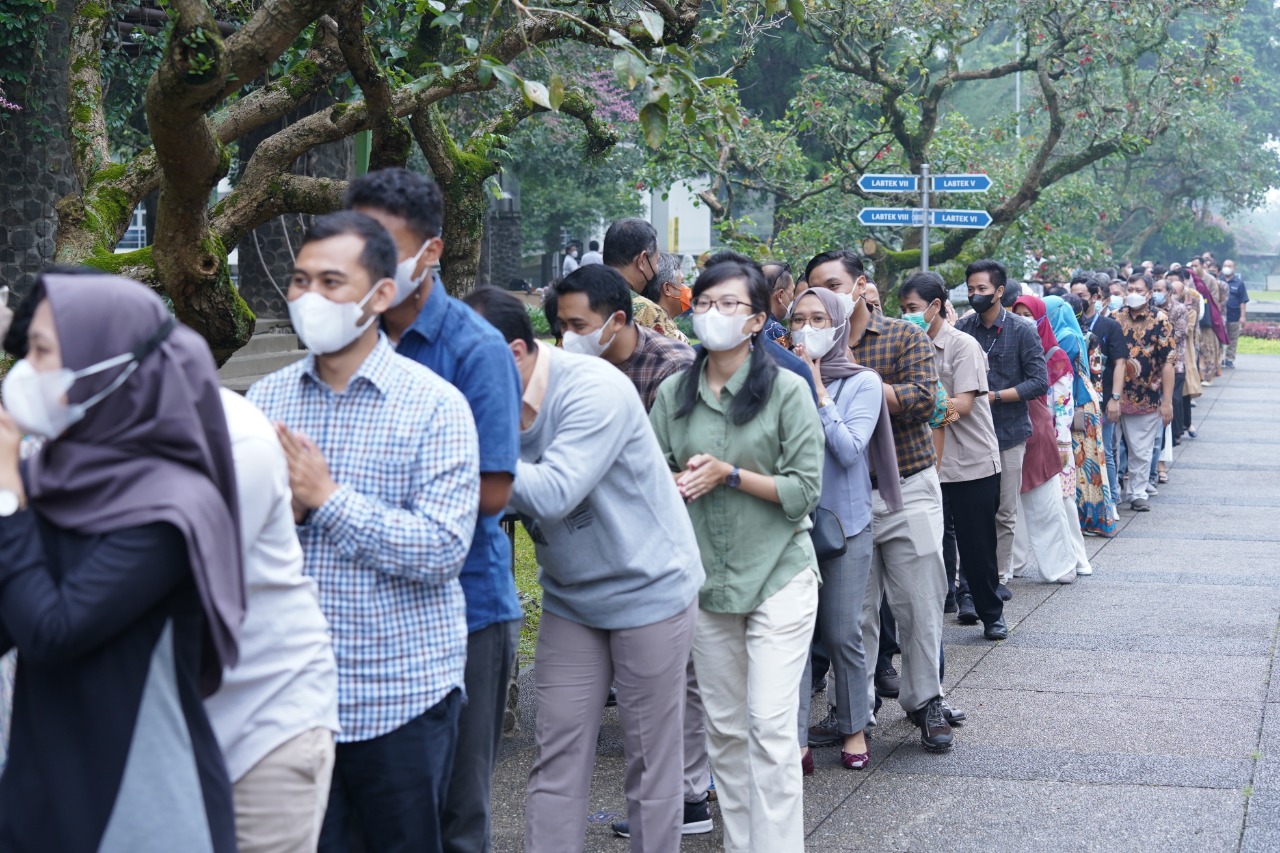
BANDUNG, itb.ac.id - Himpunan Mahasiswa Tambang Institut Teknologi Bandung (HMT-Â鶹ֱ²¥) held Indonesia’s Mining Conference: Mining Talks, themed “Transforming the Mining Industry Through Automation and Artificial Intelligence,â€� at Â鶹ֱ²¥ Innovation Park Ganesha on Saturday (Feb 14, 2026). This event, part of the 15th Indonesian Mining Students Competition (IMSC), featured six expert speakers representing various sectors of the mining industry, from practitioners and academics to technology consultants.
Toward the Mining 4.0 Era: Leveraging AI for National Industrial Resilience
.jpg)
The first session was opened by the Chairman of the Indonesian Mining Institute (IMI), Prof. Dr. Ir. Irwandy Arif, M.Sc., with a presentation titled “The Future of Indonesian Mining Toward the Industry 4.0 Era�. He emphasized that Indonesia possesses strategic mineral and coal reserves valued between USD 3.11 and 3.91 trillion as of 2023. Amidst this immense potential, transitioning to "Mining 4.0" is essential to bolster global competitiveness by integrating digital systems and the internet into conventional manufacturing processes.
He explained that Artificial Intelligence (AI) applications in mining span various aspects, from analyzing geological data to predict deposit locations to automating heavy equipment for improved workplace safety. Technologies such as Autonomous Fleet Management and Digital Twins are already being implemented by major companies to optimize fleet utility and reduce operational wait times in real-time. Furthermore, AI plays a vital role in environmental mitigation through continuous monitoring of air and water quality.
Prof. Irwandy stressed that the success of digitalization heavily depends on human resource readiness and cross-sector collaboration. While challenges such as cyber threats and high initial investment costs remain, the long-term benefits, increased profit and more environmentally friendly operations are far more significant. "Sustainable mining practices can only be realized through the implementation of Good Mining Practices supported by advanced technological instruments," he stated.
Vibe Coding: Transforming Mine Engineers into AI Solution Developers
.jpg)
The second speaker, Senior Strategic Mine Plan Supervisor at PT Mineral Alam Abadi, Ir. Harristio Adam, S.T., presented “Vibe Code Your Way to be a 10x Mine Engineer�. He highlighted AI's role in enhancing operational efficiency and safety amidst the industrial uncertainties of 2026. Harristio emphasized the need for a fresh imagination to confront the current era of operational risks.
Harristio explained that while AI operates at the enterprise level through autonomous fleets, individual engineers can now utilize "Vibe Coding". Using tools like Claude, Cursor, or Python, mine engineers can build custom, agile, and cost-effective applications within days. This enables hyper-customized solutions to address specific field challenges.
He concluded by showcasing future prospects such as Computer Vision for drilling core identification and Agentic AI for mine engineering workflows. “Tools built with vibe-coding are better because they are created directly by the person doing the work,� he remarked.
Maintenance Transformation: From Reactive to AI-Based Prescriptive Repairs
.jpg)
Dr. Widhi Setya, Head of Research Department at PERTAABI, delivered a presentation titled “From Corrective to Prescriptive: Driving Reliable Mining Operations through Digital Transformation of Heavy Equipment Maintenance�. He stressed that traditional time-based maintenance is no longer sufficient for extreme mining environments. Digitalization is crucial because asset reliability directly impacts productivity and cost efficiency.
Dr. Widhi detailed the evolution of maintenance into the prescriptive stage, where technology not only predicts failures but recommends specific actions using machine learning algorithms. Through an integrated data cycle, from real-time sensor acquisition to dashboard visualization, maintenance teams can detect anomalies before failures occur. This transformation also includes Operator Behavior Analytics to minimize damage from improper operation.
He highlighted the importance of Digital Upskilling for technicians and engineers to accurately interpret digital insights. "Heavy equipment requires regular 'medical check-ups' through IoT sensors to ensure optimal health and performance," he explained.
Digital Ecosystem: Integrating the Mining Value Chain from Upstream to Downstream
.jpg)
The discussion intensified as the Head of Processing Center of Excellence at PT Vale Indonesia, Muhammad Jinan Syakir, analyzed how digital technology has evolved from a support tool into an ecosystem connecting the entire mining value chain. In the modern industrial landscape, Jinan emphasized that efficiency can only be achieved through precise data synchronization between mining, processing, and distribution.
He explained that PT Vale has adopted smart instruments, such as automated processing unit monitoring and data-driven analytical platforms to optimize mineral recovery. This technology enables early detection of energy inefficiencies and process anomalies, directly contributing to the company's sustainability goals.
This approach aligns with a global digitalization vision to create safer, leaner mining operations with a minimal carbon footprint. "Digitalization is not just about installing sensors; it is about building a collective awareness that data is a new commodity determining our industry's sustainability," he concluded.
Digital Navigation: Consultant Strategies in the Mining 4.0 Transformation
.jpg)
The next session featured Bustanil Husni, S.T., CEO of PT Tura Consulting Indonesia, who discussed digital technology adoption strategies. He stated that Mining 4.0 is a pressing necessity for improving efficiency and operational safety. Bustanil highlighted the transition from traditional descriptive reporting to predictive analytics as the key to improving industrial governance.
In practice, he explained various tangible benefits of digitalization, from reducing production costs to increasing profitability. Technologies such as Fleet Management Systems and Geospatial Analysis enable accurate, real-time asset monitoring. Bustanil also emphasized integrating business processes from upstream to downstream to minimize accident risks and prevent leakages in state revenue.
"Faster response and decision-making are the primary differentiators between conventional and future mining," he noted.
Local Innovation: Building an Independent Mining Technology Ecosystem
.jpg)
The final session was concluded by Tatang Saripudin, CEO of TURATECH, who explored the potential of home-grown mining technology. He emphasized that technological independence is a primary pillar for Indonesia to move beyond being a consumer to becoming a key player in Mining 4.0. His main focus was on how local innovation can solve specific field challenges that global software often overlooks.
Tatang presented a portfolio of internally developed digital solutions, ranging from adaptive operational monitoring systems to integrated data management platforms. He explained that the flexibility of local technology allows for high customization suited to Indonesia's specific geological and regulatory conditions. This has proven to drastically reduce reporting times and improve management-level decision-making.
He urged the importance of having the courage to start independent research and development. "The future of our mining technology is not determined by how sophisticated the tools we buy are, but by the scale of our innovation to create our own solutions," he stated.
This conference served as a vital momentum for participants to understand that the future of Indonesian mining depends heavily on the courage to adopt digital technology. Through the synergy of automation, AI, and adaptive human resource development, the mining industry is expected to transform into a sector that is not only economically productive but also environmentally responsible.
.jpg)
.jpg)
.jpg)
.jpg)
.jpg)