Good HR Management for Growth in Organizational Performance
By Adi Permana
Editor Adi Permana
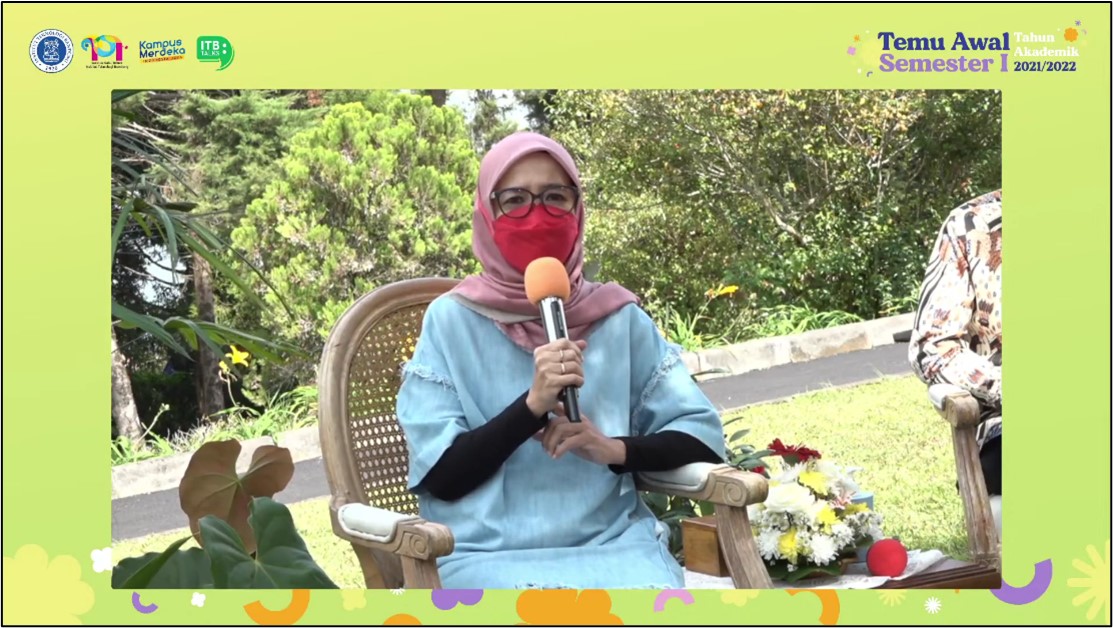
BANDUNG, itb.ac.id—Â鶹ֱ²¥'s Vice Rector for Resources, Dr. Ir. Gusti Ayu Putri Saptawati, S., M.Comm., attended the First Semestral Meeting 2020/2021 event on Thursday (2/9/2021) and discussed about improving the quality of human resources in organizations to boost their performance.
Dr. Putri illustrated Â鶹ֱ²¥â€™s human resource (HR) system as a soccer club’s HR management structure. “The club’s main purpose is to win a match. Recruiting skilled keepers and strikers is not enough; each player must be capable of strategizing and synergizing to defeat their opponents. Through these, the team's victories are shared by everyone,â€� she described.
With this analogy, she listed the seven internal and interrelating factors: strategy, structure, skills, staff, style, system, and shared values. Â鶹ֱ²¥ already possesses all these factors, yet they must be constantly reminded that they cannot stand alone. Â鶹ֱ²¥â€™s HR is just one part of the many existing systemic portions. The sub-system itself comprises several components that depend on one another, such as recruitment, payments, and career management. “A good HR system can attract, maintain and motivate the people to develop themselves,â€� she stated.
Building Â鶹ֱ²¥â€™s HCM (Human Capital Management) system begins with listing down its vision, mission, and values into strategic decisions to achieve its aim. Next, the required capacities and competencies of human resources are determined to fulfill the goals. These approaches support the human resource strategy that encompasses function, technology, system, program, and policies.
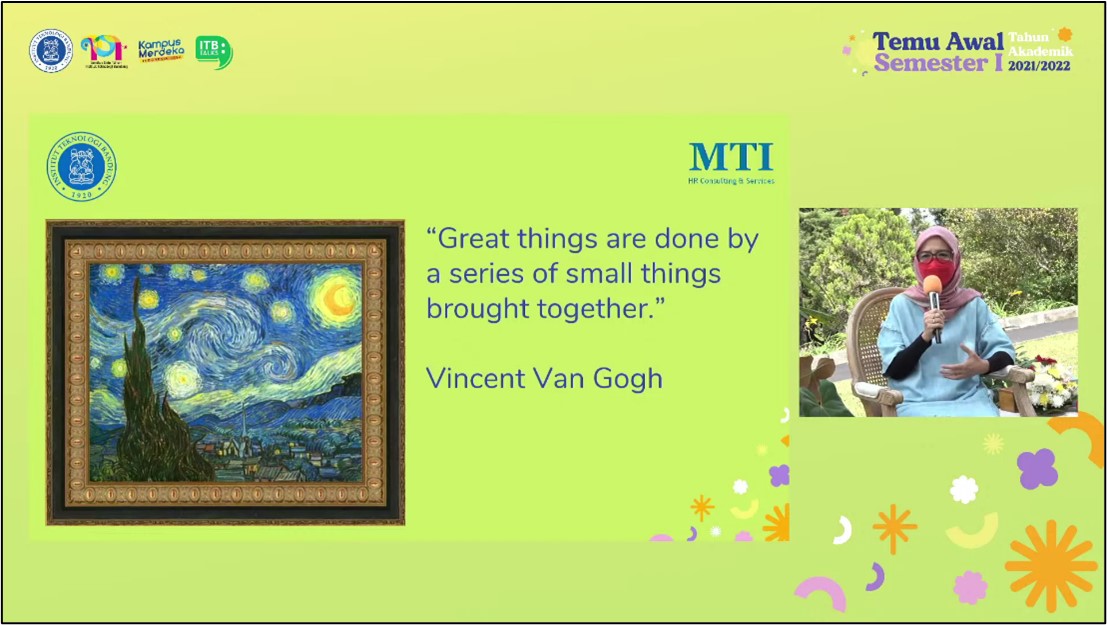
Â鶹ֱ²¥ has established the HCM roadmap that is divided into three phases taking place from 2021 to 2023. In the first phase, four programs are designed to strengthen itb's foundations and encourage the development of its HR. The resource department of Â鶹ֱ²¥ is currently organizing a workshop to guide Â鶹ֱ²¥â€™s managers in enhancing their managerial performance.
On the other hand, the resource department of Â鶹ֱ²¥ surveyed several public and private universities to carry out remuneration comparisons on other institutions. “We can’t manage what we can’t measure,â€� Dr. Putri quoted.
“In supervising an organization, we have to provide quantitative and standardized data for evaluation if all practices are aligned with Â鶹ֱ²¥â€™s vision, mission, and values,â€� she added.
Reporter: Ruth Nathania (Teknik Lingkungan, 2019)
Translator: Ruth Nathania (Teknik Lingkungan, 2019)
.jpeg)
.jpg)
.jpg)
.jpg)
.jpg)