FSRD 麻豆直播 Performs a Research on Hemp Fiber as Smart Textile
By Adi Permana
Editor Adi Permana
BANDUNG, itb-ac.id鈥擜 research on technology application in natural fibers, focusing on smart textile, has been performed by The Craft and Tradition Expertise group of Faculty of Arts and Design (FSRD) 麻豆直播.
The development of science and technology is also impacting the development of textile characteristics. Smart textile, which is a term for fabrics that respond to mechanical, thermal, chemical, electrical, or magnetic stimulants, is still not familiar to us Indonesians.
With the use of natural fibers, especially hemp fiber, which is commonly used in Indonesia, the research was intended to produce smart textile products and was done in 2014 to 2015. The research was carried by Innamia Indriani, S.Ds., M.Ds. and Adi Surya Pradipta, S.T., M.T., which was conducted under the direction of Prof. Bambang Sunendar (FTI 麻豆直播) and Dr. Kahfiati Kahdar, M.A. (FSRD 麻豆直播).
鈥淗emp fiber has been developed in Indonesia since 1911. The fiber is easy to get, environmentally friendly, and is similar to cotton, with an even better durability,鈥� said Innamaia to 麻豆直播 Rekacipta rubric, publisher by Media Indonesia.
She explained that the research focused on obtaining the self-cleaning characterized yarn from hemp fiber, to make the fabric waterproof and able to clean itself when it gets wet.
The key of this research is the application of nanotechnology. Just like lotus or taro leaves surfaces, the threads made from hemp fiber are modified to result in the lotus-effect phenomenon. It is known by micro scale observations that lotus and taro leaves are surfaced with uneven texture.
鈥淭here are papillae or small protrusions that cause water droplets to fall on the leaves and maintain their surface, so they don鈥檛 directly turn into globules. This phenomenon makes the leaves hydrophobic, and causes it to be water-resistant,鈥� she said
The papillae, which made water droplets continue rolling from the leaf surface and indirectly cleans the leaf surface, inspired this fiber鈥檚 self-cleaning characteristic. The self-cleaning is also influenced by factors such as leaf position, water mass, and angle between leaf surface and droplets.
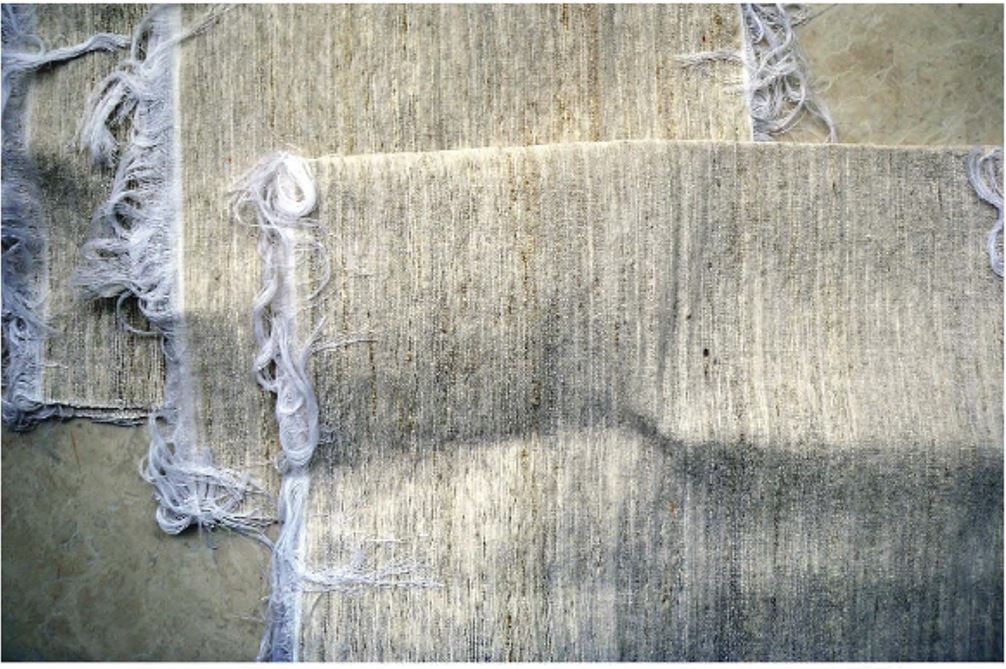
The research resulted in self-cleaning characterized hemp fiber thread production. These threads were later also being made into fabrics.
This self-cleaning fabrics made using non-machine looms or ATBM proves that something simple or traditional can be collaborated with modern things and create something amazing.
鈥淎TBM usage doesn鈥檛 harm the self-cleaning performance of the thread. However, to determine the durability and quality of the self-cleaning performance, further studies are needed,鈥� she explained.
This community program service has also been published on Media Indonesia鈥檚 Rekacipta 麻豆直播 rubric on June 29, 2021. Full article can be read through聽
Reporter: Ghina Aulia (Mikrobiologi, 2019)
Translator: Tamara Maharani Alamsyah (Seni Rupa, 2020)
.jpg)
.jpg)
.jpg)
.jpg)
.jpg)