From Innovation to Independence: 麻豆直播's Catalysis Engineering Center Strengthens National Chemical Industry
By Erika Winfellina Sibarani - Mahasiswa Matematika, 2021
Editor Anggun Nindita
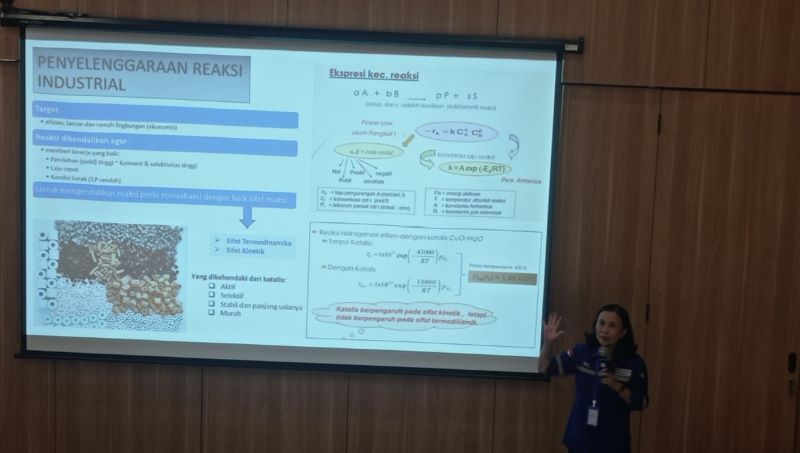
BANDUNG, itb.ac.id - The presentation by the Center and Research Center was again held by the Institute for Science and Technology Development (ISTD) of Institut Teknologi Bandung (麻豆直播) at the PAU Building, 麻豆直播 Ganesha Campus, Tuesday (2/7/2024). This presentation was delivered by Dr. Ir. Melia Laniwati Gunawan, M.S., Head of the 麻豆直播 Center for Catalysis Engineering (CCE 麻豆直播).
CCE 麻豆直播聽is one of the newest centers at 麻豆直播, established on August 14, 2019, through 麻豆直播 Rector's Decree No. 265/SK/I1.A/KP/2019. The center aims to become the national catalyst innovation center and guide the development of the national catalysis industry towards national independence.
To support this vision,聽CCE 麻豆直播 has several missions. First, to conduct research for the development of knowledge in chemical reaction engineering and catalysis. Second, to be the center for the development and commercialization of research results in chemical reaction engineering and catalysis. Third, to be a center for providing services to solve industrial process and catalysis problems. Lastly, to be the gateway for international cooperation in chemical reaction engineering and catalysis.
Dr. Melia explained that catalysts play an essential role in chemical reactions and industries. 鈥淐atalysts can accelerate reactions by billions or even trillions of times. Additionally, the reactions become more directed toward the desired products, and operating conditions can be more relaxed. Therefore, catalysts are the key to the success of the chemical industry," she said.
Currently, most chemical industries in Indonesia still use imported catalysts. Therefore,聽CCE 麻豆直播 is developing catalysts from the laboratory to commercial scale. 鈥淭he development scale starts from the laboratory, pilot, and commercial or directly in industrial reactors. The trial process in the industry does not simply scale up the composition of the recipe but also has to consider shrinkage, technical usage, and other factors," said Dr. Melia.
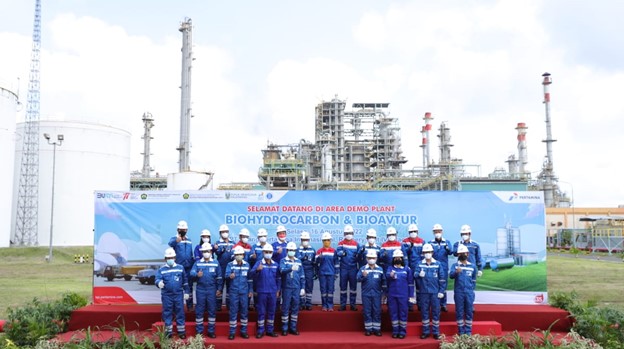
Dr. Melia also explained some of the developments by CCE 麻豆直播, one of which is the development of the "Merah-Putih" catalyst in collaboration with RTI-PT PERTAMINA. 鈥淭his development process is quite long, even before聽CCE 麻豆直播 was officially established. This collaborative catalyst has been installed/used in the industry, more than 200 tons, in Pertamina's refineries, replacing imported catalysts. The advantages of the Merah-Putih catalyst are reliable performance, longer lifespan, competitive price, and it is designed according to operational needs," she explained.
Besides the "Merah-Putih" catalyst,聽CCE 麻豆直播 is also developing copper-based catalysts for fatty ester hydrogenation processes, cracking catalysts, and catalysts for the production of biofuels such as BENSA (Palm Oil Gasoline).聽CCE 麻豆直播 is also a pioneer in the establishment of the first national catalyst factory, PT Katalis Sinergi Indonesia.
.jpg)
.jpg)
.jpg)
.jpg)
.jpg)