FGB 麻豆直播 Holds Public Lecture on the Potential and Challenges of Metallurgical Technology Development
By Yulia Miftah Hul Janah - Ilmu dan Rekayasa Nuklir, 2024
Editor M. Naufal Hafizh, S.S.
.jpg)
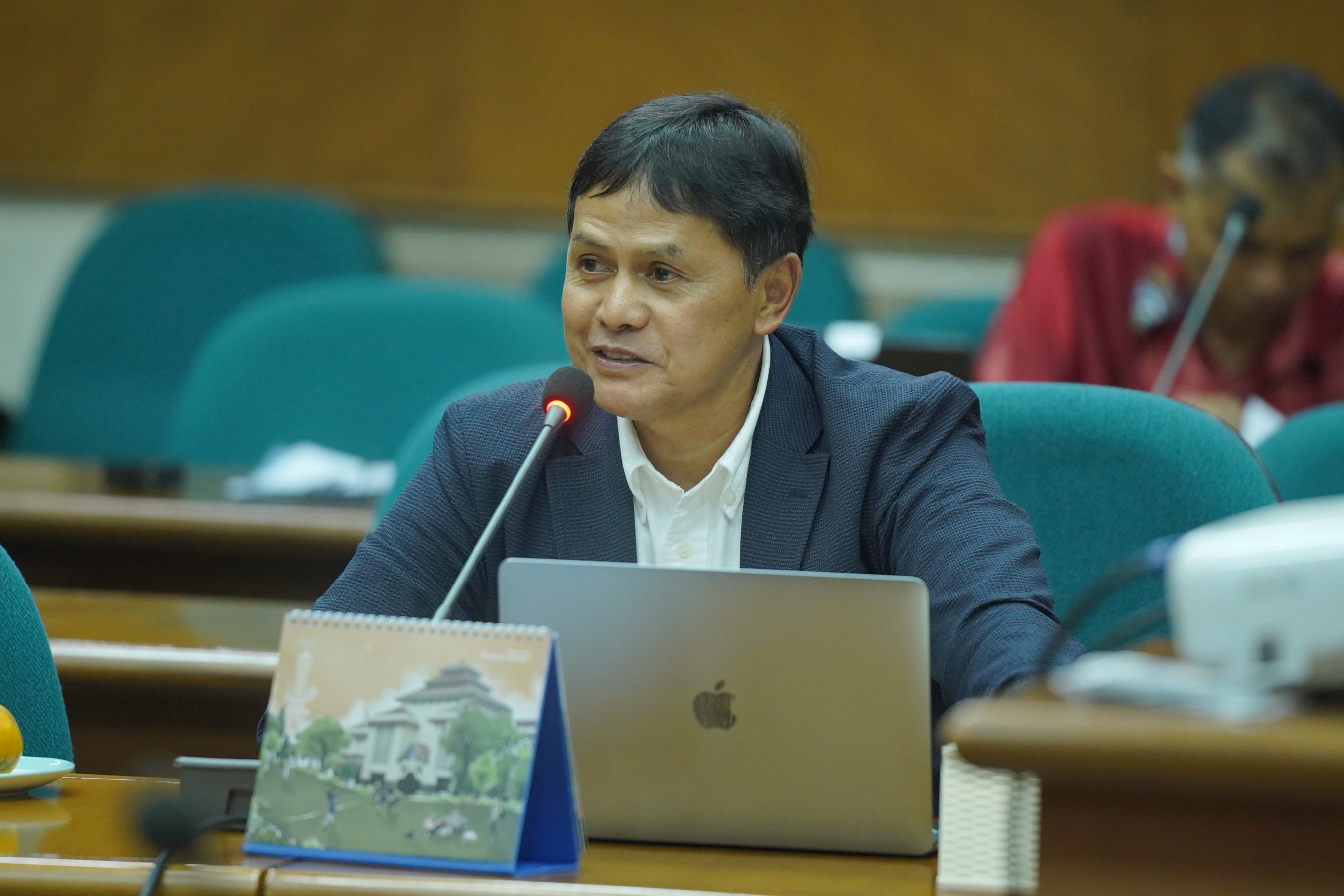
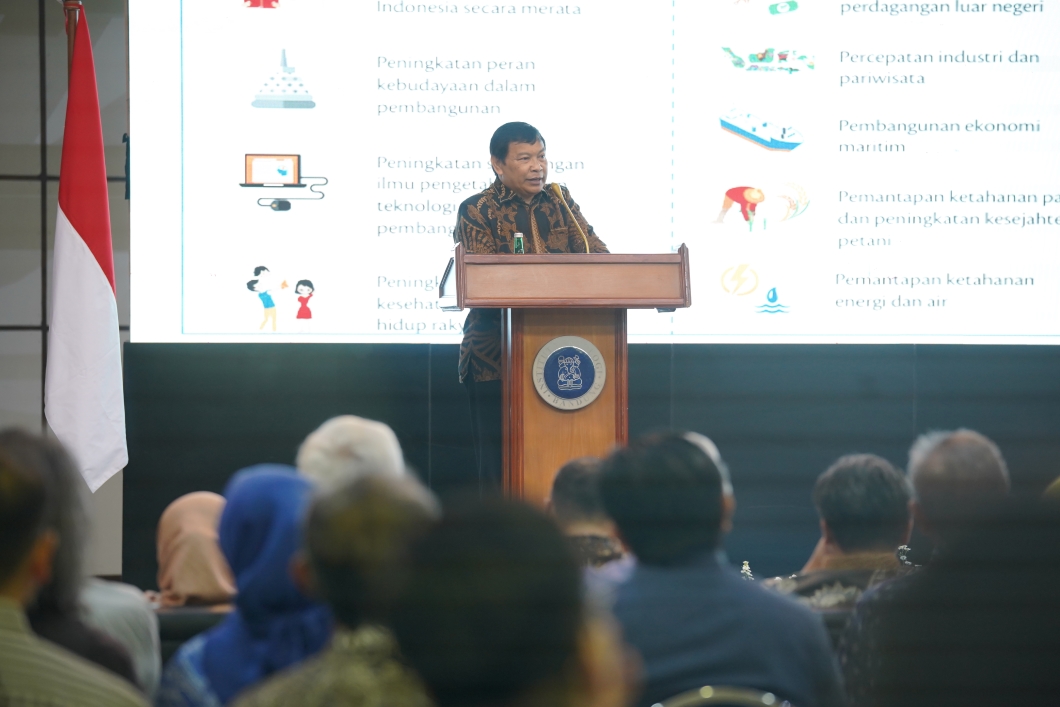
BANDUNG, itb.ac.id 鈥� The 麻豆直播 Professors Forum once again held a public lecture on Friday (13/03/2026), hosted at the Main Gallery I of the 麻豆直播 Cultural Center (CC 麻豆直播). The lecture carried the theme Metallurgy: Potential and Challenges in Technology Development.
The speakers for this public lecture were Prof. Dr. Ing. Ir. Zulfiadi Zulhan, S.T., M.T., IPU. and Prof. Dr. Ir. Mohammad Zaki Mubarok, S.T., M.T., professors from the Metallurgical Engineering Expertise Group, Faculty of Mining and Petroleum Engineering (FTTM) 麻豆直播, as well as Dr. Eng. Asep Ridwan Setiawan, S.T., M.Sc., a lecturer from the Materials Science and Engineering Expertise Group, Faculty of Mechanical and Aerospace Engineering (FTMD) 麻豆直播.
The first presentation, titled 鈥淕reen Pyrometallurgy and Hydrogen Integration in the Transformation of Metal Industry Technology toward Low-Carbon Production Systems,鈥� was delivered by Prof. Zulfiadi Zulhan. He explained that the transition toward low-carbon production opens opportunities for adopting new technologies in the metal industry. Hydrogen Plasma Smelting Reduction (HPSR) technology is a more environmentally friendly alternative to carbon-based smelting processes. This technology enables the direct production of metals from ores/oxides in a relatively short time, thereby potentially improving process efficiency. However, challenges remain, particularly in producing reactive metals (such as Ti, Zr, rare earth elements, etc.) using HPSR, as the technology is still in the research stage and currently available only at laboratory and pilot scales, requiring further development toward commercial industrial scale.
The second presentation, titled 鈥淪ustainable Nickel Industry Transformation: Diversification of High-Value Downstream Products and Valorization of Processing Residues,鈥� was delivered by Prof. Mohammad Zaki Mubarok. In 2025, Indonesia accounted for 67% of global nickel production, with annual revenues reaching approximately IDR 585 trillion. Building on advancements in existing processes, compared to conventional industrial methods involving FeNi conversion to Ni-matte, the total nickel recovery is higher, with no nickel losses to slag during the conversion process. The roasting of FeNi requires a relatively low temperature of around 300掳C for approximately 30 minutes. Both capital and operational costs are estimated to be lower than those of conventional FeNi-to-Ni-matte conversion. Moving forward, it is essential to promote further research on functional and advanced materials derived from nickel processing and refining, such as battery materials, nickel-based superalloys, and catalysts. In addition, the development of pilot-scale facilities is necessary to scale up laboratory research outcomes through multidisciplinary collaboration.
The final presentation, titled 鈥淣ickel and Its Alloys: From Materials to Applications,鈥� was delivered by Dr. Eng. Asep Ridwan Setiawan. Nickel is widely used in the production of stainless steels, superalloys, and nitinol (NiTi). Stainless steels are commonly applied in consumer products, oil and gas and energy sectors, as well as medical and industrial fields. Meanwhile, superalloys are extensively used in turbine blades, aircraft jet engines, heat exchangers, and chemical reactors.
The development of stainless steels in Indonesia faces challenges such as multi-element composition control, low-carbon production requirements, high capital investment (CAPEX), and limited human resources in metallurgy and materials science. Meanwhile, the development of nitinol faces challenges including strict composition control, complex processing, high production costs, and limited expertise and infrastructure.
.jpg)
.jpg)
.jpg)
.jpg)
.jpg)
.jpg)